

An automatic watch keeps time as part of your daily routine, powered by the movement of your wrist. Yet a watch you leave off overnight or through a quiet weekend may stop, so you need to reset the time and date before wearing it again. A quartz watch avoids that chore with a battery, but it does not run on wrist movement.
That’s where an automatic watch with a longer power reserve helps. A wound mainspring stores energy and keeps the watch running after you take it off, giving you more time between wears before it stops. You can pick it up and get on with your day, with fewer adjustments.
Many models also offer clear power-reserve indicators, useful water resistance, and luminous hands for quick time checks. A date display can make everyday planning easier, while a well-finished case suits both work and weekends.
Power reserve, size, materials, and features vary, so consider how often you wear a watch and what matters most to you. Explore the best power reserve automatic watches below to find one that fits your routine.
8 Best Power Reserve Automatic Watches Reviews

1.Bauhaus 20605 Automatic Watch, 41mm
Japanese automatic movement displays remaining power on the beige dial

2.FORSINING EA10 Automatic Watch, Date Display
Self-winding movement runs on everyday arm motion with a date display

3.SEIKO SRPG35 Automatic Watch, 41-Hour Reserve
41-hour power reserve keeps the automatic watch running between wears

4.SEIKO SRPB77 Presage Cocktail Time Watch
41-hour power reserve keeps this automatic watch running between wears

5.SEAKOSS 1963 Automatic Watch, 40mm
Seagull ST1780 movement tracks power reserve, pointer date and seconds

6.SEIKO SRPK15 Presage Cocktail Time Watch
41-hour power reserve keeps the automatic watch running between wears

7.Bulova 96A201 Aerojet Automatic Watch
40-hour power reserve keeps the self-winding watch running between
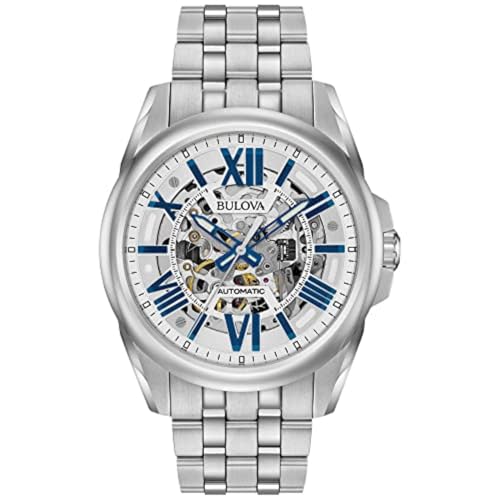
8.Bulova 96A187 Classic Sutton Automatic Watch
Self-winding movement draws power from your wrist's motion as you wear
1. Bauhaus 20605 Automatic Watch, 41mm
Bauhaus 2060-5 tracks its remaining power on the dial, giving you a quick view of how much reserve the automatic movement has. Its Japanese automatic movement also runs without a battery, while the glass base lets you watch the mechanism at work.
The beige dial places the date at 3 o’clock and the month display at 6 o’clock. These calendar details sit alongside the power reserve display, so you can check the date, month and winding reserve without searching across separate subdials.
A silver-colored stainless steel case frames the dial, and its 41-millimeter diameter suits buyers who want a watch with a noticeable but familiar-sized face. Slightly curved mineral glass covers the dial, while water resistance to 5 ATM supports everyday wear around water.
The brown leather strap has white contrast stitching and measures 20 millimeters wide. A classic pin buckle secures it, and the leather gives the watch a traditional look for work or dressier occasions.
Made in Germany, the watch combines a clean dial layout with an automatic movement and visible mechanical details. The power reserve indicator is its main draw for buyers comparing automatic watches, since it shows the movement’s remaining reserve directly on the dial.
At about 0.15 pounds, it is light to wear through the day. This Bauhaus watch suits buyers who want an automatic watch with a power reserve display, calendar functions and a leather strap.
- Power reserve display shows remaining winding
- Glass base reveals the automatic movement
- Date and month displays add useful calendar info
- 5 ATM water resistance suits everyday wear
- 41mm case gives the dial room to read
- Mineral glass is less scratch-resistant than sapphire
2. FORSINING EA10 Automatic Watch, Date Display
For tracking the date and remaining power at a glance, the FORSINING automatic watch offers both displays in a mechanical design. Its self-winding movement uses the motion of your arm to keep the watch running, so it does not rely on a battery.
The power reserve display helps you check how much running time remains before the watch needs more movement. A date display adds a practical daily reference, making this watch useful for regular wear as well as for buyers comparing automatic watches.
A protective mineral dome lens covers the dial, while the alloy case and black genuine leather strap give it a traditional wristwatch look. The listed color is black and white, a contrast that keeps the dial’s details distinct.
The watch weighs about 5 ounces, so it has a substantial feel on the wrist rather than the lightness of a small accessory. Its classic styling can suit everyday outfits, while the date and power reserve displays provide more information than a time-only dial.
It arrives with an original gift box and a watch manual, which gives you the basics for setup and care. This model suits buyers who want an automatic watch with a power reserve display, a date window and a black leather strap.
- Power reserve display tracks remaining running time
- Self-winding movement uses everyday arm movement
- Date display adds a useful daily reference
- Alloy case offers less premium material appeal
3. SEIKO SRPG35 Automatic Watch, 41-Hour Reserve
41 hours of power reserve gives the Seiko SRPG35 a useful buffer between wears. Its 4R36 automatic movement also supports manual winding, so you can wind it by hand when needed instead of relying only on wrist motion.
The black dial pairs with beige luminous hands and numerals, which help you read the time in low light. A day-and-date display on the face keeps both details visible during a quick glance.
Its stainless steel case measures about 39 millimeters across, a moderate size for everyday wear. The beige nylon strap keeps the watch in a casual field-watch style, while the black dial gives it a simple look.
Water resistance reaches 10 bar, so the watch can handle water exposure within that rating. That makes it useful for daily activities, though the listed specification does not describe a particular activity or depth.
The automatic movement winds as you wear the watch, and manual winding offers another way to keep it running. Together with its 41-hour reserve, that gives owners flexibility when they rotate watches or leave this one off for a while.
This Seiko suits buyers who want an automatic watch with a practical power reserve, day-and-date display and water resistance. Its restrained dial and nylon strap also fit people looking for a casual watch rather than a dress-focused style.
- 41-hour reserve gives flexibility between wears
- Manual winding offers another way to power it
- 10-bar water resistance suits daily wear
- Luminous hands and numerals aid low-light reading
- Nylon strap has a casual rather than dressy look
4. SEIKO SRPB77 Presage Cocktail Time Watch
Watch enthusiasts who want an automatic with a useful reserve get 41 hours of running time from this Seiko Presage Cocktail Time. Its 4R35 caliber powers the watch through natural wrist movement, then keeps it running for up to 41 hours when you take it off.
That reserve suits a daily wearer who may leave the watch aside overnight or switch watches for a day. The 4R35 also handles automatic timekeeping, while the date calendar helps you check the day’s date at a glance.
The silver dial has a gloss finish and a deep pattern, with blue hands that stand out against the dial. Its date display adds a practical detail without changing the classic watch layout.
A 40.5mm stainless steel case pairs with a silver bracelet. The see-through caseback lets you view the movement inside, making the automatic mechanism part of the watch’s appeal.
Water resistance reaches 50 meters, which covers everyday splashes and brief exposure to water. It is not a watch for swimming at greater depths, so buyers who need stronger water protection should look elsewhere.
This silver Seiko suits people who want an automatic dress watch with a 41-hour reserve, a date display and a visible movement. Its patterned dial and stainless steel construction also make it a fitting choice for regular wear.
- 41-hour reserve supports wear between days
- See-through caseback shows the automatic movement
- Patterned silver dial pairs with blue hands
- Stainless steel case and bracelet suit daily wear
- 50-meter water resistance limits deeper use
5. SEAKOSS 1963 Automatic Watch, 40mm
On a wrist, the SEAKOSS 1963 pairs a 40 mm case with a mechanical movement that shows its power reserve. The Seagull ST1780 also runs central hours and minutes, with a small seconds subdial for checking the watch’s motion.
The power reserve indicator helps you see how much running time remains before the watch needs winding. Its pointer date display gives the date a dedicated dial, while a recessed side corrector advances it.
A sapphire crystal covers the dial and helps resist everyday scratches. The 316L stainless steel case has a brushed finish, and its 40 mm diameter gives this pilot-style watch a moderate wrist presence.
The case measures 12 mm thick, with a 48 mm lug-to-lug length and 20 mm lug width. Those proportions give buyers useful fit details to consider before choosing a watch for daily wear.
For low-light checks, Japanese luminous material supports visibility after it has been exposed to light. The watch has 5ATM, or 50 m, water resistance for everyday splashes when the crown is fully secured.
Before winding or setting the time, unscrew the crown counter-clockwise. This green automatic watch suits buyers who want a mechanical timepiece with a visible power reserve, pointer date, and scratch-resistant crystal.
- Power reserve indicator shows remaining running time
- Sapphire crystal helps resist everyday scratches
- Seagull ST1780 adds pointer date and small seconds
- 316L steel case has a brushed finish
- Needs crown secured for splash resistance
6. SEIKO SRPK15 Presage Cocktail Time Watch
The 41-hour power reserve makes the SEIKO Presage Cocktail Time a practical choice for anyone comparing automatic watches. Its self-winding movement draws power from your wrist, and it can keep running for about 41 hours after you take it off.
The 4R35 automatic movement powers the watch and keeps time. Its date display gives you the day of the month at a glance, adding a useful everyday feature without changing the watch’s straightforward role as a timekeeper.
A patterned blue dial with a glossy finish gives the face its main visual detail. The design takes inspiration from the Blue Moon cocktail, while the gradated color adds another layer to the dial.
The stainless steel case and bracelet provide a coordinated metal finish for daily wear. A see-through caseback lets you look at the movement, a detail that may appeal to buyers who enjoy seeing how an automatic watch works.
Water resistance reaches 50 meters, so the watch can handle some contact with water. It weighs about 6 ounces, which is worth considering if you prefer a lighter watch on your wrist.
This SEIKO suits buyers who want an automatic watch with a useful 41-hour reserve, a date display and a patterned blue face. Its metal construction and visible movement add appeal for someone who values watchmaking details as well as daily timekeeping.
- About 41-hour reserve gives useful off-wrist time
- Patterned blue dial adds visual detail
- See-through back shows the automatic movement
- 50-meter water resistance limits water use
7. Bulova 96A201 Aerojet Automatic Watch
Bulova makes the Classic Aerojet for buyers who want an automatic watch with a 40-hour power reserve. Its movement winds as you wear it, and the reserve keeps it running for a while when you take it off.
The three-hand display keeps time reading simple, while the open aperture gives a view of part of the movement. A hacking feature stops the seconds hand when you set the time, helping you align it to a reference.
Inside, the automatic movement gets power from wrist motion rather than a battery. Its 40-hour reserve gives you some flexibility between wears, though it may need resetting if it sits unworn longer than that.
A double-curved mineral box crystal covers the black dial. The curved profile adds a raised contour over the face, while mineral glass protects it during everyday wear.
The silver-tone stainless steel case pairs with a black leather strap embossed with a crocodile pattern. Its 41mm case gives the dial a substantial presence, and the black strap and dial keep the color scheme coordinated.
Water resistance is rated to 30 meters, which suits routine exposure to splashes but not swimming. This Bulova suits buyers who want an automatic watch with a visible movement detail, a 40-hour reserve and a classic leather-strap look.
- 40-hour reserve offers flexibility between wears
- Hacking seconds help set the time precisely
- Open aperture reveals part of the movement
- Double-curved crystal gives the dial a raised profile
- 30-meter water resistance limits water use
8. Bulova 96A187 Classic Sutton Automatic Watch
With its 42-hour power reserve and self-winding movement, this Bulova watch keeps running through periods when it isn’t on your wrist. Wrist motion powers the automatic movement, so it does not rely on a battery for its operation.
The full skeleton dial shows the watch’s inner workings, while the three-hand layout keeps time easy to read. Luminous hands help you check the time in dim light, and the 21-jewel movement adds another detail for buyers comparing automatic watches.
A 43-millimeter silver-tone stainless steel case gives the watch a substantial wrist presence. Blue accents add contrast to the stainless-steel finish, and the mineral crystal covers the dial.
Its 100-meter water resistance suits swimming and other water activities, though the data does not specify diving use. That makes it a practical choice for everyday wear when some water exposure is part of the day.
At about 0.4 pounds, it has a noticeable weight on the wrist. The watch also comes in one size, so buyers who prefer a smaller or larger fit may want to check how 43 millimeters suits them.
This Bulova is best suited to buyers who want an automatic watch with a 42-hour reserve, visible movement, and water resistance for everyday use. It rounds out the roundup with a mechanical style that puts its movement on display.
- 42-hour reserve gives useful time off-wrist
- Self-winding movement runs from wrist motion
- Full skeleton dial displays the movement
- 100-meter water resistance suits swimming
- Mineral crystal can scratch more easily
How to Choose the Best Power Reserve Automatic Watches
Choosing an automatic watch means balancing how long it runs off-wrist with fit, legibility, water protection, and upkeep. Your routine, wrist size, preferred look, and budget all shape which features deserve priority.
| If You Need | Look For | Expect |
|---|---|---|
| Weekend wear | At least 40-hour reserve | Reset after longer breaks |
| Easy time setting | Hacking and hand-winding | More setting control |
| Small-wrist comfort | Case near 39–40 mm | Fewer oversized styles |
| Night-time reading | Luminous hands and markers | Brighter, sportier dial |
| Swimming protection | 10 bar or higher | Bulkier, less dressy cases |
| A dress watch | Slim case and leather strap | Less water protection |
| Fewer service costs | Established movement, service access | Higher purchase price |
Power Reserve
Power reserve is how long a fully wound watch runs before stopping. Around 40 to 42 hours suits daily wear, but a watch left off-wrist through a full weekend will usually need winding or resetting.
For longer breaks, seek a longer stated reserve or a power-reserve indicator, which shows the remaining stored energy. An indicator helps you judge when to wind, though it does not extend the running time.
The stated duration assumes the watch is sufficiently wound and working normally. If you rotate between several watches, choose extra reserve or expect to set the time and calendar after wearing another watch for a while.
Winding and Setting
Automatic movements wind through your wrist’s motion, but that does not mean every watch starts fully wound when you put it on. Hand-winding lets you add energy through the crown, which helps after the watch has stopped.
Look for clear instructions on winding, crown positions, and date setting before purchase. A hacking feature stops the seconds hand when you pull the crown, making precise time setting easier for users who value synchronization.
Calendar mechanisms need careful handling. Avoid changing the date during the movement’s stated restricted hours, often late evening or early morning, because the calendar gears may already be engaged; follow the manual’s specific guidance.
Case Fit and Comfort
Case diameter is only one part of fit: lug-to-lug length, thickness, and how the lugs curve also affect whether a watch sits comfortably. Try to compare those measurements with a watch you already wear.
Cases around 39 to 41 mm often suit many wrists, while 43 mm or larger watches take up more space and may feel heavier. A large dial can be easier to read, but it can also catch on sleeves.
Bracelets and straps change the feel on your wrist. Metal bracelets tend to add weight, while leather and nylon are often lighter; check strap length, width, and whether replacement options are easy to find.
Legibility and Display
A power-reserve indicator is useful only if its scale is readable at a glance. Check its position and markings, then consider whether date, day, month, or small-seconds displays make the dial too crowded for your preferences.
For dim rooms or night use, look for luminous material on the hands and hour markers. It needs light exposure to glow, and brightness fades over time, so it is not a substitute for a backlight.
Dial finish and crystal shape affect reflections and viewing angles. A patterned or glossy dial may catch the eye, while simpler contrast between hands and background often makes quick time checks easier.
Water Resistance
Water-resistance ratings describe pressure testing, not a promise that every watch is safe for every water activity. A 3 bar rating is generally for splashes, 5 bar suits everyday exposure, and 10 bar offers more swimming headroom.
For frequent swimming, look for at least 10 bar and confirm the maker’s guidance for that specific watch. A 5 bar watch is better treated cautiously around water, and neither rating guarantees suitability for diving.
Water resistance can decline as seals age or after impact. Keep the crown fully secured where applicable, and have seals checked during servicing if you regularly expose the watch to water.
Case, Crystal, and Strap
Stainless steel is a common case material that resists everyday wear, while alloy cases may cost less but differ in scratch resistance and long-term finish. Check the stated material rather than judging by color alone.
Sapphire crystal generally resists scratches better than mineral glass, while mineral glass is often less costly to replace. Curved crystals can add visual depth but may catch reflections, so consider readability as well as appearance.
Leather suits dressier settings but can deteriorate with sweat and repeated wetting. Nylon is usually more casual and dries readily, while steel bracelets offer durability but add weight and need correct sizing.
Movement and Maintenance
Automatic watches do not use batteries, but they still need periodic servicing to keep their movement clean, lubricated, and accurate. Ask about local repair access and typical service costs before choosing a watch you plan to keep.
Movement details such as manual winding and hacking describe useful functions, while jewel counts alone do not prove accuracy or durability. Look for clear movement specifications and realistic accuracy guidance rather than relying on a single number.
Automatic watches can gain or lose time each day, and accuracy varies with movement, condition, and how the watch is worn. If precise timekeeping is essential, check the stated tolerance and the seller’s process for addressing out-of-range performance.
Price
Lower-priced watches may offer the basic automatic experience, a date display, and mineral crystal, but case materials, finishing, and service access can vary. Read the specifications closely so a low price does not hide a costly compromise.
Higher prices may bring sapphire, more detailed dial finishing, stronger water protection, or easier access to movement service. Pay extra when those features suit your routine; decorative dial details alone may not justify the difference.
Include future servicing, strap replacement, and bracelet adjustment in your budget. A watch with a modest purchase price can still cost more to own if parts or qualified repair options are difficult to find.
Warranty and Seller Support
Read the warranty length, coverage, and exclusions before paying, especially for water damage, normal wear, and accuracy issues. A warranty is more useful when the seller explains how repairs are handled and where the watch must be sent.
Buy from a seller with a clear return window and accessible customer support. That gives you time to assess fit, dial readability, and setting instructions, while keeping the packaging and documents needed for a return.
Frequently Asked Questions
How do power reserve automatic watches get their power?
Their movements wind through wrist motion as you wear them. The FORSINING EA10 and Bulova 96A187, for example, use self-winding movements.
What happens when I take an automatic watch off?
It runs until its stored power is used up, then stops. The SEIKO SRPG35, SRPB77, and SRPK15 have a stated 41-hour reserve; the Bulova 96A201 has a 40-hour reserve.
Which watches show the remaining power on the dial?
The Bauhaus 20605 displays remaining power on its beige dial, while the SEAKOSS 1963’s Seagull ST1780 movement tracks power reserve.
Should I choose the Bauhaus 20605 or the SEAKOSS 1963?
Choose the Bauhaus 20605 if you want remaining power displayed on a beige dial. The SEAKOSS 1963 adds a pointer date and seconds, alongside power-reserve tracking.
What should I consider when choosing between the Seiko Presage Cocktail Time watches?
The SRPB77 and SRPK15 both have automatic movements with a 41-hour power reserve. Compare their individual design and specifications to decide which suits your preferences.
Do these watches have a date display?
The FORSINING EA10 has a date display, and the SEAKOSS 1963 has a pointer date. Check each model’s product details for other date functions.
What should I do if an automatic watch stops after sitting unused?
Wind or wear it according to the manufacturer’s instructions, then set the time and date if needed. Check the manual for the correct winding and setting procedure.
So, What Should You Buy?
For most people, the SEIKO SRPG35 is the best pick, pairing a clear 41-hour reserve with an automatic movement. For a budget-conscious choice, consider the FORSINING EA10 and its practical date display; choose the Bauhaus 20605 if you want to see remaining power on the dial.
Need a reserve indicator? The SEAKOSS 1963 tracks power, date and seconds. For a classic look with 41-hour power, choose either SEIKO Presage; the Bulova 96A201 offers 40 hours, while the 96A187 winds with wrist motion. Pick the watch that fits your priorities.