

Long runs, trail adventures, and city jogs let you explore new routes and clear your head. Standard fitness trackers just record your pace, leaving you guessing at crossroads and turning you around when paths fork in unfamiliar neighborhoods.
That problem has a simple fix: a running watch with maps. It displays full route details right on your wrist, guiding you along pre-loaded trails and showing your exact position without needing your phone.
Detailed color mapping keeps you on the right path, turn-by-turn alerts prevent wrong turns, and built-in GPS tracks your distance accurately. Your training runs stay smooth and worry-free from start to finish.
Sizes, battery capacities, and map storage vary among models, so your ideal choice depends on how far you usually run. Compare the best running watches with maps below.
5 Best Running Watches with Maps Reviews

1.Garmin fēnix 8 Sapphire GPS Smartwatch
Bright 1.4 inch AMOLED display and GPS give 16 days of smartwatch mode
2.COROS Nomad Outdoor GPS Smartwatch
Free pre-loaded global maps with turn-by-turn navigation and 50h GPS

3.Casio G-Shock Move GPS Running Watch
GPS signal reception and wrist heart rate measurement up to 220 bpm

4.SAMSUNG Galaxy Watch 4 GPS Smartwatch
Built-in GPS tracks your outdoor activities with precision and ease
5.Garmin Forerunner 55 GPS Running Watch
Easy-to-use wrist heart rate monitor and GPS track your every run
1. Garmin fēnix 8 Sapphire GPS Smartwatch
Garmin fēnix 8 helps runners map routes, track workouts and manage health around the clock. This multisport GPS smartwatch pairs a bright 1.4-inch AMOLED display with a scratch-resistant sapphire lens and a durable titanium bezel.
The battery runs for up to 16 days in smartwatch mode or up to 47 hours in GPS mode. Multi-band GPS with SatIQ technology combines with a 3-axis compass, gyroscope and barometric altimeter to map outdoor adventures accurately.
Training readiness scores use sleep quality, recovery, training load and HRV status to check if your body is primed for hard runs. Targeted strength training plans, real-time stamina tracking and dynamic round-trip routing help build endurance without losing your way back.
For daily calls and quick texts, a built-in speaker and mic let you talk through your paired smartphone. Off-grid voice commands control watch settings without any phone connection, and a built-in LED flashlight adds visibility after dark.
Health monitoring tracks wrist-based heart rate, advanced sleep, respiration and Pulse Ox levels alongside an ECG app for heart rhythm checks. A 40-meter dive rating and leakproof metal buttons support scuba and apnea dive activities. Weighing about 0.18 pounds, this orange and graphite smartwatch suits athletes and adventurers.
- 1.4-inch bright AMOLED display
- Up to 16 days of battery life
- Multi-band GPS with SatIQ technology
- Built-in speaker and microphone
- 40-meter dive rating support
- No major cons
2. COROS Nomad Outdoor GPS Smartwatch
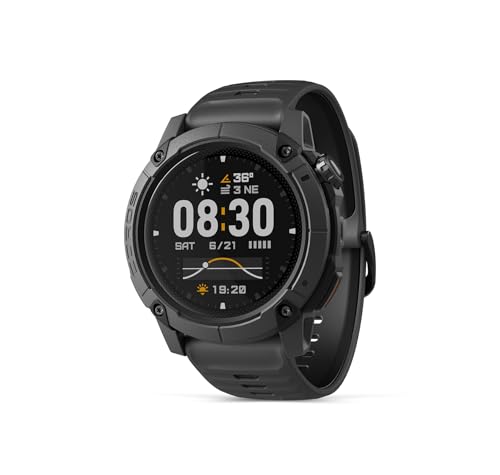
For tracking runs and long trail workouts, the COROS Nomad Outdoor GPS Smartwatch brings 22 days of daily battery life. This rugged black sports watch combines a dual-layer polymer and aluminum alloy bezel with a 1.3-inch memory in pixel touchscreen to stay readable in direct sunlight.
Free pre-loaded global maps with street names, back-to-start navigation, and safety alerts keep you on route during remote training sessions. Real-time and forecasted weather data, sunrise times, moon phases, and tides help you plan exercise around changing outdoor conditions.
Built-in adventure journal software lets you record voice notes, tag locations, and transcribe voice-to-text memos during activities. Anglers can also log catches and mark key spots, while safety alerts protect you in unfamiliar areas.
The GPS mode runs for up to 50 hours before needing a recharge, matching long weekend excursions. Weighing about 0.22 pounds, this standard size watch sits comfortably on the wrist without adding bulk.
Global maps and turn-by-turn navigation guide runners through unfamiliar streets and trails. It suits serious outdoor runners, hikers, and explorers who need reliable mapping and long battery life.
- 22 days of daily battery life
- 50 hours of GPS battery life
- Free pre-loaded global maps
- Turn-by-turn navigation
- 1.3-inch MIP touchscreen
- No major cons
3. Casio G-Shock Move GPS Running Watch
Over two hundred feet of water resistance makes the Casio G-Shock Move ready for heavy rain and deep swimming during long training days. This red running watch packs GPS signal reception for tracking outdoor routes and pace across every mile.
A built-in heart rate monitor checks pulses up to 220 bpm, while training analysis tracks fitness trends and recovery time. Tough Solar power charges the battery using sunlight, alongside a dedicated cable for indoor use.
An altimeter, barometer, thermometer and compass help navigate rough trails and changing weather outdoors. The resin strap holds the watch securely on the wrist during hard running workouts and daily wear.
Training functions display distance, speed and lap times while logging up to 100 runs and 140 lap times. An LED backlight with a super illuminator lights up the screen clearly for early morning or late night runs.
Notifications from mobile phones link up through Bluetooth for easy connectivity during busy schedules. This solar assisted watch suits runners, athletes and outdoor explorers who track detailed fitness data.
- Tracks route distance and pace via GPS
- Built-in heart rate monitor up to 220 bpm
- Two hundred meter water resistance depth
- Tough Solar power system charges daily
- Heavier than ordinary daily fitness bands
4. SAMSUNG Galaxy Watch 4 GPS Smartwatch
Runners who want detailed workout tracking and health insights find a reliable partner in the Samsung Galaxy Watch 4. This silver smartwatch packs advanced health monitoring tools to check your heart rate, manage fitness routines and record everyday sleep cycles.
The built-in GPS maps outdoor running routes with precision while you push through distance goals. Every metric stays clear and easy to read on the large AMOLED screen during workouts in direct sunlight or dim evening hours.
You can check your heart rhythm on the go using the built-in ECG monitor, which spots potential health changes early. Fall detection adds safety during trail runs by calling emergency help if you take a hard stumble on uneven ground.
The sleek aluminum body uses a compact 40 millimeter size that sits light on the wrist without bouncing around. Bluetooth connectivity pairs the watch to your phone for notification alerts and training data syncs after you finish exercising.
Everyday wear feels comfortable thanks to the slim shape and timeless silver finish suited for both workouts and office hours. This wearable device helps runners, athletes and active professionals keep close tabs on fitness progress throughout busy weeks.
- Built-in GPS maps outdoor running routes
- Includes an ECG monitor for health tracking
- Large AMOLED screen shows clear stats
- Detects hard falls during outdoor training
- 40mm aluminum body sits light on wrist
- No major cons
5. Garmin Forerunner 55 GPS Running Watch
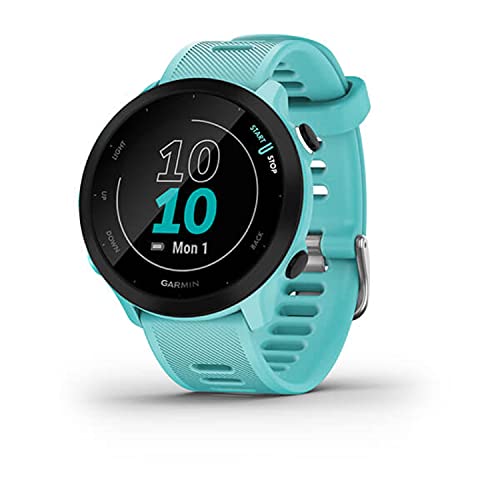
On the wrist, the Garmin Forerunner 55 tracks workouts and daily health without adding bulk during long runs or sleep. This aqua watch weighs about a tenth of a pound and stays light through any daily activity.
Built-in GPS maps out how far, how fast and where you run on every outdoor route. It also monitors heart rate at the wrist while tracking your daily steps and overall wellness.
Smartwatch mode runs for up to two weeks on a single charge, cutting down the need for frequent plugging in. GPS mode keeps going for up to twenty hours during long training sessions and outdoor events.
PacePro offers guidance for a chosen course or distance, helping you plan race day strategies easily. Suggested workouts change based on your training history, recovery time and fitness level to guide daily exercise.
Activity profiles track running, cycling, track runs, virtual runs, pool swimming, Pilates, HIIT and breathwork. You can download free watch faces and apps from the Connect IQ Store through a paired smartphone.
Last but not least, this aqua running watch suits runners, athletes and everyday fitness fans who want reliable tracking.
- Up to 2 weeks of battery life
- Built-in GPS tracks route data
- Monitors wrist heart rate
- Daily suggested workouts
- No onboard maps
- Small screen size
How to Choose the Best Running Watches with Maps
Choosing the right running watch with maps ensures you navigate unfamiliar trails safely while tracking your daily fitness progress accurately. Several technical specifications, ranging from battery runtime to screen visibility, shape this purchase decision.
| If You Need | Look For | Expect |
|---|---|---|
| Maximum battery | Low power MIP screen | Dull colors indoors |
| Bright maps | AMOLED display panel | Shorter daily charge |
| Offline routing | Built-in global maps | Higher retail price |
| Rugged build | Titanium or steel | Extra wrist weight |
| Voice notes | Onboard microphone | Reduced waterproofing |
| Quick charging | Solar assist panels | Larger case size |
| Basic training | Simple GPS tracking | Limited route guidance |
Global Mapping and Navigation Capabilities
Offline mapping capabilities let you navigate unfamiliar hiking trails without relying on a nearby smartphone connection. Built-in global maps display topographical details directly on your wrist, helping you avoid wrong turns during long runs. Turn-by-turn directions alert you immediately when approaching a trail junction or street corner. Without onboard map storage, your wrist companion simply shows a blank breadcrumb trail instead of recognizable roads.
Navigating dense urban environments or remote mountain paths requires responsive panning and zooming controls on the touchscreen. High-end devices allow you to download entire regional maps via Wi-Fi before heading out the door. Selecting a model with robust routing software ensures you never get lost during unexpected detours.
Screen Technology and Outdoor Visibility
AMOLED screens deliver vibrant colors and deep blacks, making maps exceptionally easy to read in low light. These bright panels drain battery power much faster, forcing you to use gesture wake modes. Memory-in-Pixel displays offer lower resolution graphics, but they remain perfectly visible under direct sunlight without draining reserves.
Choosing the right display technology depends on whether you run mostly at night or during sunny afternoons. Outdoor enthusiasts often prefer transflective screens because sunlight actually improves visibility rather than washing out graphics. Touchscreen sensitivity also matters if you plan to operate map panning controls while wearing thick running gloves.
Battery Life and GPS Endurance
Battery longevity determines how many days you can train between mandatory wall recharges. Smartwatch mode often lasts several weeks, but active GPS tracking drains that reserve within twenty hours. Solar charging technology supplements battery levels during outdoor exposure, extending your training time significantly between charges.
Running long marathons or multi-day ultramarathons demands an extended GPS battery mode to record the entire journey. Heavy mapping usage and frequent backlight activation decrease overall runtime faster than standard heart rate monitoring. Always verify the specific hours provided under continuous satellite tracking rather than basic standby time.
Physical Size and Weight Comfort
Watch dimensions prevent bulky hardware from bouncing annoyingly against your wrist during fast sprints. Smaller 40mm cases fit slender wrists comfortably, whereas larger 47mm housings accommodate bigger batteries and antennas. Titanium or steel bezels increase overall durability, but they add noticeable weight compared to lightweight resin.
Wearing a heavy timepiece twenty-four hours a day for sleep tracking causes skin irritation if the strap lacks breathability. Lighter models under 50 grams disappear on your arm, letting you focus entirely on your running cadence. Testing different case diameters in person prevents purchasing a device that feels overwhelmingly massive.
Health Tracking and Sensor Suite
Wrist-based heart rate sensors monitor your cardiovascular exertion continuously throughout intense workouts and daily resting periods. Advanced altimeters and barometers record elevation changes accurately, showing precisely how much vertical climbing you completed. Pulse oximeters measure blood oxygen saturation levels, giving you extra data regarding high-altitude acclimatization.
Electrocardiogram sensors help detect irregular heart rhythms, offering deeper medical insights beyond simple fitness tracking. Thermometers and electronic compasses round out the outdoor sensor suite for wilderness exploration. Buying a watch loaded with specialized sensors raises the cost substantially if you only need basic pace data.
Audio Features and Smart Connectivity
Bluetooth connectivity pairs your watch with a smartphone to deliver incoming text notifications and call alerts. Onboard microphones let you record voice notes or answer calls directly from your wrist during breaks. Smart features drain battery reserves quickly, so disable unnecessary notifications if you prioritize maximum GPS endurance.
Local music storage lets you leave your heavy phone at home while streaming songs to wireless headphones. Voice assistants allow hands-free control over timers, alarms, and smart home gadgets right from your running track. Evaluating which smart additions you actually use daily prevents paying for unnecessary software integrations.
Durability and Water Resistance
Water resistance ratings protect internal circuits during heavy rainstorms, swimming sessions, or accidental submersion in rivers. Scuba-rated dive computers withstand deep underwater pressure, making them suitable for extreme aquatic sports and triathlons. Scratch-resistant sapphire crystal faces prevent ugly abrasions when your wrist accidentally strikes rocks.
Resin straps resist sweat and salt water corrosion better than leather bands during intense summer training sessions. Rugged polymer cases absorb heavy shock impacts during trail falls, keeping delicate internal mapping chips safe. Investing in superior exterior protection saves money on costly repairs after accidental drops.
Price Tiers and Value
Entry-level running watches cost under two hundred dollars, providing basic GPS tracking, pace metrics, and simple heart rate monitoring. Mid-range options add color screens and basic route breadcrumbs for three to five hundred dollars. Premium models exceed eight hundred dollars, delivering full offline topographical maps, titanium bezels, and solar charging.
Paying higher prices makes sense only if you frequently explore unknown wilderness trails requiring detailed offline cartography. Casual neighborhood runners rarely need expensive global maps or advanced dive ratings built into their wrist devices. Match your actual training habits to the appropriate price bracket to secure optimal value.
Warranty Coverage and Support
Manufacturer warranties typically cover hardware defects and battery failures for one full year after purchase date. Extended protection plans cover accidental drops and water damage, giving you peace of mind during extreme sports. Customer support responsiveness varies significantly across brands, affecting how quickly you receive replacement parts. Reviewing return policies before purchasing ensures you can exchange an uncomfortable watch size without incurring restocking fees.
Frequently Asked Questions
Are all of these running watches powered by rechargeable batteries, or do some require disposable ones?
All of these running watches operate on built-in rechargeable power sources rather than disposable batteries.
What materials and build quality can I expect from these watches?
The products feature durable outdoor-ready builds, with models like the Garmin fēnix 8 Sapphire offering premium sapphire components.
What items are typically included in the box when you purchase one of these GPS watches?
Each watch generally comes packaged with its respective charging cable and user documentation.
Should I choose the Garmin fēnix 8 Sapphire or the Garmin Forerunner 55 for my mapping needs?
The Garmin fēnix 8 Sapphire offers a bright AMOLED display and up to 16 days of smartwatch mode, whereas the Garmin Forerunner 55 focuses on being an easy-to-use option to track your every run.
How do I handle tracking my outdoor routes and activities with these watches?
You can track your runs using the built-in GPS features, such as the precise tracking on the SAMSUNG Galaxy Watch 4 or the pre-loaded global maps with turn-by-turn navigation on the COROS Nomad.
So, What Should You Buy?
The Garmin fēnix 8 Sapphire is the best pick for most people, offering a bright AMOLED display and long battery. Budget-conscious runners will love the simple Garmin Forerunner 55, while explorers wanting free global maps should choose the COROS Nomad.
For everyday connected fitness, the Samsung Galaxy Watch 4 works best, and rugged fans will appreciate the Casio G-Shock Move. Select the model that fits your needs today.