

Interval workouts bring variety to your runs and help you track progress toward your goals. A phone timer can mark each effort, but it takes attention away from your pace and can feel awkward to check mid-run.
For clearer prompts on the move, a running watch can time work and recovery intervals from your wrist. Set each phase in advance, then follow alerts without reaching for your phone or losing track of the session.
Many models also show pace, distance, heart rate, and workout summaries, helping you judge your effort and spot progress over time. GPS records your route, while customizable screens keep the details you value easy to see.
Running watches differ in comfort, battery life, GPS features, and how easily you can set intervals, so your routine should guide your choice. Explore the best running watches for interval training below to find one that suits your runs.
8 Best Running Watches for Interval Training Reviews

1.EZON T031B01 GPS Running Watch with Lap Timer
GPS tracks running distance and pace, with up to 50 laps saved

2.Timex Ironman Classic 100 Interval Watch
Sequential interval timers structure workouts, with lap and split data

3.Timex Ironman T200 Interval Training Watch
200-lap memory tracks splits and workout intervals with precision

4.CakCity 1068 Digital Watch with Stopwatch
Quick-access stopwatch and timer keep runs and workout drills on track
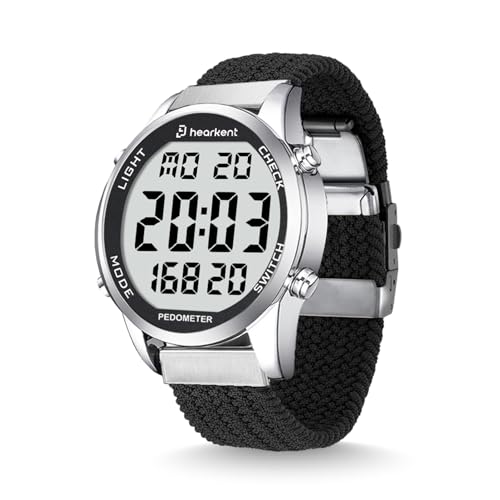
5.Hearkent Pedometer Watch with Step Counter
Step, mileage, and calorie tracking show daily activity without an app
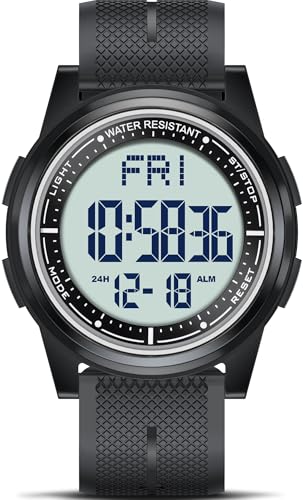
6.Beeasy AW02 Digital Watch with Stopwatch
1/100-second stopwatch and countdown timer support workout timing

7.Casio WS-1600H Digital Watch with 9 Timers
Nine preset interval timers from 10 to 45 minutes simplify workout
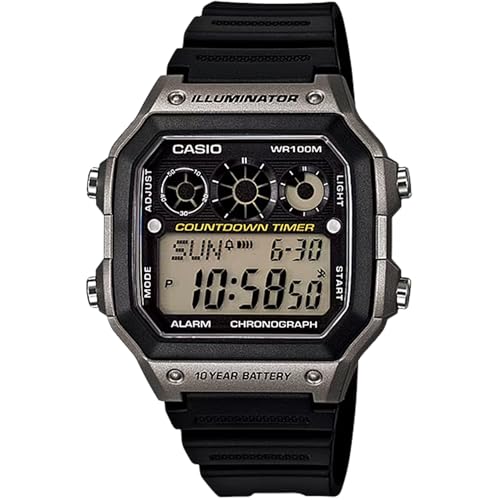
8.Casio AE-1300 Digital Sports Watch
Nine preset interval timers and event timing help structure training
1. EZON T031B01 GPS Running Watch with Lap Timer
EZON GPS Running Watch helps runners track intervals with GPS, lap timing and pace data. Its GPS takes about one minute to start from a cold start, while a hot start reconnects instantly, so the watch can record position during runs and hikes.
After exercise, one button brings up distance, average pace, calories burned and total time. It stores the last 10 workouts, letting you compare recent sessions and check how each interval day went.
The stopwatch runs for up to 99 hours, 59 minutes and 59 seconds, with countdown and lap modes. It can save data for up to 50 laps, including each lap’s time, pace, distance and average speed, useful for reviewing repeated efforts.
You can enter your height, weight, age and gender, then choose imperial or metric units for personalized fitness tracking. GPS also sets the time using the city you select, so the watch can update its clock without manual time setting.
The matte black watch weighs about 0.13 pounds. Its alarm chimes for about 20 seconds and stops when you press any button, making it handy for reminders as well as training.
A 5ATM water-resistance rating covers handwashing, showers and swimming, but the maker says not to press buttons underwater or wear it for diving or sauna use. This watch suits runners who want lap-by-lap interval records and basic GPS workout summaries.
- Saves pace, distance and time for 50 laps
- Tracks GPS position for runs and hikes
- Stores the last 10 workout records
- 5ATM rating covers swimming and showers
- Cold GPS start takes about one minute
2. Timex Ironman Classic 100 Interval Watch
For interval training, the Timex Ironman Classic 100 helps structure workouts with sequential interval timers and track laps with its chronograph. Its 100-hour chronograph and 100-lap memory give runners room to record and review longer sessions.
The watch stores each workout by date and recalls both lap and split times. It also shows your best and average lap data, which helps you compare efforts across a training session without relying on memory.
Sequential interval timers let you set up workout stages in order, while five customizable alarms can mark other parts of your day. The five-button layout gives direct access to the timers, and two time zones help keep travel schedules organized.
A full calendar adds the date at a glance, and the INDIGLO backlight lights the dial for reading in low light. The watch resists water to 100 meters, so you can wear it for swimming and snorkeling as well as running.
Its silver-tone 44mm resin case has yellow accents, with a black 18mm resin strap and buckle closure. The acrylic crystal covers the dial, and the watch weighs about 0.1 pounds. This model suits runners who want detailed lap records and interval timing in a straightforward digital watch.
- 100-lap memory saves dated workout records
- Best and average lap data aid comparisons
- Sequential timers help structure interval sessions
- Water resistance reaches 100 meters for swims
- No major cons
3. Timex Ironman T200 Interval Training Watch
200 laps give the Timex Ironman T200 room to record repeated splits during interval training. Its 100-hour chronograph stores lap times, while the interval-training function helps you track work and recovery periods across a run.
The 24-hour countdown timer can mark a planned session, and three alarms can be set for daily, weekday or weekend reminders. Two time zones and a day, date and month calendar round out its timekeeping tools.
A black digital display sits inside a 42mm resin case with a black top ring and an acrylic lens. Indiglo lighting helps you read the dial in dim conditions, and 100-meter water resistance makes it suitable for swimming as well as running.
The 16mm black silicone strap adjusts to fit wrists up to 8 inches, giving you a secure fit for training and races. At about 0.1 pounds, it is a light option for runners who want lap and interval functions without a heavier watch.
This watch suits runners who value straightforward workout timing and stored split records over a larger set of smart features. Its race-focused alarms and interval tools also make it useful for athletes who want a simple way to organize training sessions.
- Stores 200 laps for tracking repeated intervals
- 100-hour chronograph records long training sessions
- Indiglo backlight helps with low-light readings
- Water resistant to 100 meters for swimming
- No major cons
4. CakCity 1068 Digital Watch with Stopwatch
Runners and coaches who want straightforward interval timing get a large display, a stopwatch and a timer in the CakCity Digital Watch. Its quick-access timing functions help you track runs, workout periods and drills without working through complicated menus.
The 50mm face uses oversized digits and a high-contrast display, so you can check your time during training. A one-touch EL backlight helps you read it in darkness, while the display also suits bright outdoor conditions.
For interval sessions, the stopwatch measures activity and the timer helps mark work and rest periods. The watch also has an alarm and date display for everyday reminders and keeping track of the day.
Its 50-meter water resistance covers rain, hand-washing and splashes, but the maker says not to use it for swimming, diving or saunas. Avoid pressing its buttons underwater.
A shock-resistant case and lightweight resin band suit outdoor work and weekend activities. At about 0.1 pounds, it is easy to wear for runs, training drills or daily errands.
Quartz movement and a long-lasting battery keep the watch focused on basic timekeeping. This black digital watch suits runners who want simple interval tools and a large face, rather than a watch built around advanced running data.
- 50mm face with oversized digits for quick checks
- Stopwatch and timer help track interval sessions
- EL backlight supports time checks in darkness
- 50-meter water resistance covers rain and splashes
- Not suitable for swimming, diving or saunas
5. Hearkent Pedometer Watch with Step Counter
On a wrist suited to everyday wear, the Hearkent pedometer watch tracks steps, distance and calories without a phone connection. Its stopwatch and countdown timer also support interval sessions, though it lacks dedicated workout-program details.
The watch records daily steps automatically and resets the count at midnight. You can check the previous day’s total the next day, while a 10-second anti-miscount function waits for continuous movement before counting steps.
Alongside activity tracking, it displays time and includes an alarm and hourly chime. The stopwatch can time work and recovery periods, while the countdown timer helps mark an interval’s length.
Large numbers and a five-second EL backlight make the display easier to read in dim conditions. It has 30-meter water resistance for everyday wear and splashes while washing hands, but it is not for diving or hot baths.
The black watch has a soft nylon strap and an alloy case. Its strap adjusts without tools and fits wrists from about 5.5 to 8.3 inches; the folding clasp uses two buttons.
No Bluetooth or app is required, and the watch runs on a CR2032 battery without charging. It suits runners who want basic interval timing and step tracking without app-based training features.
- Tracks steps, distance and calories daily
- Stopwatch and countdown help time intervals
- No app, Bluetooth or charging required
- Backlight and large numbers aid reading
- No dedicated interval workout programs
- Not suitable for diving or hot baths
6. Beeasy AW02 Digital Watch with Stopwatch
A 1/100-second stopwatch gives the Beeasy Digital Watch the precision to time short running intervals. Its countdown timer also runs for up to 23 hours, 59 minutes and 59 seconds, so you can set a longer workout timer.
For workouts that cross time zones, dual-time display keeps two times available on your wrist. You can switch between 12- and 24-hour formats, while the automatic calendar shows the date.
The watch supports 50-meter water resistance, which Beeasy describes as suitable for shallow swimming and cold showers. It is not intended for long underwater activities such as diving, and hot water and steam should be avoided.
Its black silicone sports-watch design has a 44mm case and a slim 7mm profile. The backlight helps you read the display in dim conditions, and its light weight of about 0.08 pounds makes it easy to wear while running or going about daily routines.
For workout reminders, it includes an alarm clock, a daily alarm and an hourly alarm. The countdown timer and stopwatch also suit interval sessions, though the data does not mention preset interval programs or GPS tracking.
This watch suits runners who want basic timing tools for intervals, plus a slim everyday watch for school or daily wear. Its water resistance adds flexibility, with the stated limits worth keeping in mind.
- 1/100-second stopwatch times short intervals
- Countdown timer runs for nearly 24 hours
- 50-meter water resistance suits shallow swimming
- Slim 7mm case with a backlight
- No GPS or preset interval programs
7. Casio WS-1600H Digital Watch with 9 Timers
Casio makes the WS-1600H a straightforward pick for runners who want preset interval timing and event stopwatch functions. Its 9 preset timers range from 10 to 45 minutes, so you can choose a workout segment with one button press.
The stopwatch measures in 1-second steps and includes an add-time function. Its upper display tracks up to 59 minutes and 59 seconds, while the lower display reaches 99 minutes and 59 seconds, giving you separate timing options for intervals or longer sessions.
A triple-display face shows three timers at once: a stopwatch, a second timer and a circular timer. That layout can help you check several timing details during training without cycling through each display.
For runs beyond familiar routes, world time covers 29 time zones across 48 cities, with daylight saving time settings. The amber LED backlight has an afterglow for checking the display in low light, and a daily alarm and hourly signal help with reminders.
The black watch weighs about 0.2 pounds and has 100-meter water resistance, so it suits active use in and around water. Casio lists an approximate 10-year battery life, plus an auto-calendar that runs through 2099.
This watch suits runners who want simple interval presets and multiple timer displays rather than a dedicated GPS or running-data focus.
- Nine presets make interval timing quick to set
- Three timer displays show timing details together
- 100-meter water resistance suits active water use
- About 10-year battery life reduces battery changes
- 1-second steps limit fine timing precision
8. Casio AE-1300 Digital Sports Watch
With nine preset interval timers and a stopwatch, the Casio AE-1300WH-8AV gives runners tools to time repeated efforts and recovery periods. Its multi-display layout keeps timing information available alongside other watch functions.
The interval timers suit workouts built around repeated cycles, while the stopwatch tracks elapsed time for runs or individual efforts. Event timing adds another option for timed activities, and the watch also includes a daily alarm.
World Time covers 29 time zones and 48 cities, which can help runners keep track of local time while traveling. You can choose a 12- or 24-hour display, and the full auto calendar runs through 2099.
A CR2025 lithium battery powers the watch for approximately 10 years, so it needs little battery maintenance. The 100-meter water resistance makes it suitable for swimming and other water activities as well as running.
The black resin construction keeps the watch focused on practical sports use. Its LED backlight has an afterglow to help you read the display in low light, and an hourly time signal offers another timekeeping aid.
This Casio is a straightforward option for runners who want interval timing, a stopwatch and long battery life in one digital watch. It also suits athletes who value World Time and water resistance beyond their training sessions.
- Nine interval timers support repeated workout cycles
- About 10-year battery life limits battery changes
- 100-meter water resistance suits swimming and running
- World Time covers 29 zones and 48 cities
- Multi-display layout may take time to learn
How to Choose the Best Running Watches for Interval Training
Interval training asks you to track hard efforts, recovery periods, and total time without losing focus on your run. The right watch depends on timer flexibility, readable controls, water protection, comfort, battery needs, and how much training data you want.
| If You Need | Look For | Expect |
|---|---|---|
| Repeating work and recovery | Sequential interval timers | Setup takes more time |
| Simple preset sessions | Multiple preset timers | Less control over intervals |
| Detailed lap comparisons | Large lap memory | More button navigation |
| GPS pace and distance | Built-in GPS | More frequent battery charging |
| Easy reading on the move | Large, high-contrast digits | A larger case on your wrist |
| Low-maintenance daily wear | Long-life replaceable battery | Fewer connected features |
| Wet-weather training | Higher water-resistance rating | No guarantee against every water exposure |
Interval Timer Flexibility
The timer is central to interval training, so match its settings to your sessions. Look for separate work and recovery durations, repeated cycles, and a clear signal at each transition, which helps you stay on pace without watching the screen.
Some watches offer preset intervals, while others let you build sequences. Presets save setup time for familiar workouts, but adjustable timers suit changing plans; confirm the shortest and longest intervals before buying.
Also note whether the timer repeats automatically or needs button presses. Automatic cycles keep your attention on running, while manual starts offer more control for track sessions with changing recovery lengths.
Timing And Lap Records
A stopwatch records total time and individual laps, helping you compare repeated efforts or track a full workout. Look for lap memory that covers your usual session, along with saved average or best-lap figures if you review pacing later.
One-second resolution is adequate for most recreational intervals, while finer timing helps when you compare short, fast repeats. Do not assume a watch’s large lap count means it stores every detail; confirm which lap information remains available afterward.
A dated workout log makes it easier to separate sessions and follow progress over time. If you mainly want to time the run in the moment, a basic stopwatch may be simpler and less costly.
GPS And Pace Data
Built-in GPS records route distance and outdoor pace without relying on your phone, which helps when intervals happen away from a measured track. Compare how the watch reports current pace, average pace, distance, and whether it saves workout records.
GPS can take time to find satellites, especially before the first run or near tall buildings. If you need to start promptly, look for clear signal-status information and allow time for connection before beginning your warm-up.
GPS watches usually need more frequent charging than simple digital timers. If your sessions are short and you already know the route distance, a stopwatch-based model may avoid charging while still timing each repeat.
Display And Controls
Large, high-contrast digits are easier to read while you run, particularly during quick glances between efforts. Look for a display that shows the timer or lap time clearly, rather than forcing you to scroll through several screens.
A backlight helps with early starts, evening runs, and dim indoor tracks. Check how it activates and how long it stays lit, since a brief light may require repeated button presses during a workout.
Buttons should be easy to find and press while moving, but a complicated layout can cause missed laps or accidental resets. Before buying, learn how to start, stop, and record a lap, and favor controls you can operate quickly.
Fit And Running Comfort
A watch that shifts, catches clothing, or presses against your wrist can distract you during faster intervals. Compare case width, thickness, weight, and band material, then consider whether the strap adjusts securely without feeling tight.
Large displays are easier to read, but their wider cases may feel bulky on smaller wrists. A lighter, slimmer watch usually suits runners who dislike wrist weight, while a larger face may help those who prioritize legibility.
Fit also affects button access and sensor contact on GPS models. Check the stated wrist range and strap width, and leave enough room for comfortable movement without letting the watch slide during arm swings.
Water Resistance
Water-resistance ratings help you judge suitability for rain, sweat, and swimming, but they do not make every watch safe in every water situation. Match the rating to your activities and follow the maker’s guidance for buttons and water exposure.
For ordinary running in rain, a splash-resistant watch may be enough. Frequent pool use calls for a higher rating and explicit swimming suitability; a number alone does not confirm that every water activity is supported.
Battery And Power
Battery type affects upkeep: rechargeable watches need regular charging, while replaceable-cell models may run for years before a battery change. Consider how often you train and whether you want to remember another device on a charging routine.
GPS, backlights, and frequent alerts can shorten runtime compared with basic timekeeping. If you run long events or travel often, prioritize stated battery life in the mode you will use, not just standby time.
A long-life battery is useful when you want a simple training timer with little maintenance. It is less suited to runners who need frequent GPS tracking or connected features, which typically draw more power.
Extra Functions
Alarms, countdown timers, dual time zones, and calendar displays add convenience, but they should not distract from interval controls. Choose extras you will use regularly, since extra menus can make a watch slower to operate mid-run.
Step and calorie estimates offer a broad view of activity, not precise measures of training effort or energy use. Treat them as optional context, and prioritize timer and lap functions if intervals are your main goal.
Phone connectivity is another choice, not a requirement for timed workouts. App-free watches avoid pairing and account setup, while connected models may suit runners who want to store, review, or share data digitally.
Price And Value
Lower-priced watches often focus on basic timing, alarms, and a simple display, which suits runners who manage distance separately. Midrange options may add flexible interval settings, more lap storage, or longer battery life.
Paying more is worthwhile when a feature solves a regular need, such as GPS pace tracking or saved workout data. It is less useful when you will not use those tools, so compare the actual functions rather than price alone.
Warranty And Support
Warranty coverage offers a remedy for certain faults, but terms vary by seller and region. Read the duration, exclusions, and repair or replacement process before buying, especially if the watch will see frequent outdoor use.
Also confirm that replacement straps or batteries are available when needed. Straightforward support helps keep a basic training watch usable for longer, while a short warranty may matter less for an inexpensive, easily replaced timer.
Frequently Asked Questions
Which watches use GPS to track running distance and pace?
The EZON T031B01 has GPS for tracking distance and pace, and can save up to 50 laps. The other listed watches focus on timers, stopwatch functions, or activity tracking.
Which watch is best for tracking many laps and intervals?
The Timex Ironman T200 stores 200 laps and tracks splits and workout intervals. The EZON T031B01 is another option if GPS tracking and saving up to 50 laps are priorities.
Should I choose the Casio WS-1600H or the Casio AE-1300?
Both offer nine preset interval timers. The WS-1600H’s timers range from 10 to 45 minutes, while the AE-1300 also includes event timing.
What can I use if I want step and calorie tracking without an app?
The Hearkent Pedometer Watch tracks steps, mileage, and calories without an app. It is geared toward daily activity tracking rather than GPS-based pace and distance.
Which watches can help structure interval workouts?
The Timex Ironman Classic 100 uses sequential interval timers, while the Casio WS-1600H and AE-1300 provide nine preset interval timers. The Timex Ironman T200 also tracks workout intervals and splits.
Do any of these watches include a stopwatch or countdown timer?
The CakCity 1068 offers quick-access stopwatch and timer functions, and the Beeasy AW02 has a 1/100-second stopwatch and countdown timer. The Casio models also provide preset interval timers.
So, What Should You Buy?
For most runners, the Timex Ironman Classic 100 is the best pick: its sequential interval timers structure workouts, while lap and split data help track each effort. Choose the EZON T031B01 if GPS-based distance and pace matter most, or the Timex Ironman T200 if you want 200-lap memory for detailed splits.
On a budget, consider the CakCity 1068 for quick stopwatch and timer access; the Beeasy AW02 offers precise stopwatch timing, while the Casio WS-1600H and AE-1300 suit preset-interval workouts. For app-free activity tracking, pick Hearkent. Choose the model that fits your training and run with confidence.