

Long ultras ask you to manage pace, distance, and energy for hours across changing terrain. A phone tracks a run, but its screen can be hard to check on the move, and frequent GPS use may drain its battery before the finish.
For clearer guidance on the trail, a running watch tracks your route and workout from your wrist. You can check distance, pace, and elapsed time at a glance, while GPS records your progress without keeping your phone in hand.
Many watches offer long battery life to cover extended outings, navigation tools to help you follow a route, and heart-rate tracking to guide your effort. Water resistance and customizable data screens also make it easier to keep useful details close through changing conditions.
Models differ in battery life, mapping features, comfort, and price, so consider your routes and what you want to monitor. Explore the best running watches for ultras below to find one suited to your long-distance goals.
7 Best Running Watches for Ultras Reviews
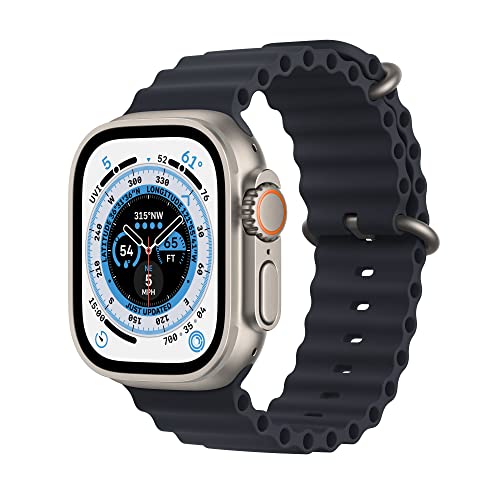
1.Apple Watch Ultra GPS + Cellular 49mm
Up to 36 hours of battery life helps you keep going on long runs

2.GOLDEN HOUR GH-1313 Digital Sports Watch
50M water resistance suits shallow-water swimming and cold showers

3.Apple Watch Ultra 2 GPS + Cellular 49mm
Up to six metrics show at once on the bright Always-On Retina display

4.POLAR Pacer GPS Fitness Tracker Watch
Up to 100 hours in power save mode extends tracking between charges
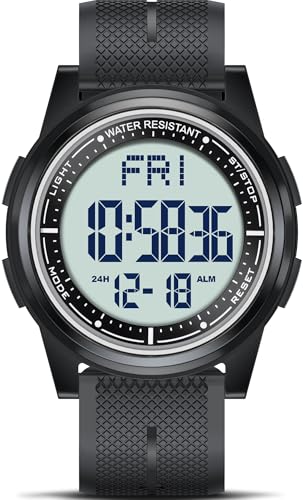
5.Beeasy AW02 Ultra-Thin Digital Sports Watch
50M water resistance suits shallow-water swimming and cold showers

6.Garmin fēnix 8 AMOLED GPS Smartwatch
Up to 47 hours in GPS mode helps track long outings between charges

7.EZON T031B01 GPS Running Watch with Stopwatch
GPS tracks distance and pace, with lap data saved for up to 50 laps
1. Apple Watch Ultra GPS + Cellular 49mm
Apple Watch Ultra helps ultrarunners track training and routes with dual-frequency GPS, workout metrics and up to 36 hours of battery life. Its 49mm titanium case and 100m water resistance also suit long days on trails and water.
The Workout app shows Heart Rate Zones and Running Form, giving runners more detail to check during training. Precision dual-frequency GPS records distance, route and pace, while the Compass app adds waypoints and Backtrack to help retrace a route.
Its Always-On Retina display stays visible in direct sunlight, and its larger watch face has room for more complications. The customizable Action button gives you direct access to chosen functions, while the larger Digital Crown and accessible buttons help with control.
The Midnight Ocean Band comes with this GPS + Cellular version, and the watch supports Apple Watch health, safety and connectivity features. The title identifies it as renewed, so buyers should consider that when choosing between renewed and new watches.
Battery life reaches up to 36 hours, which can cover long training sessions without frequent charging. The 100m water resistance also makes it suited to water sports, while the corrosion-resistant titanium case is designed for rugged outdoor use.
At about 0.14 pounds, it keeps weight low on the wrist, and its one-size fit accommodates wrists from about 5.1 to 7.9 inches. This watch suits ultrarunners who want detailed workout tracking, route tools and cellular connectivity in a rugged GPS watch.
- Dual-frequency GPS tracks routes, pace and distance
- Up to 36 hours of battery for long outings
- Workout app tracks Heart Rate Zones and Running Form
- 100m water resistance suits water sports
- Always-On display stays visible in direct sunlight
- No major cons
2. GOLDEN HOUR GH-1313 Digital Sports Watch
For runs, climbs and other workouts, this digital watch gives you basic timekeeping tools in a slim design. Its stopwatch can track elapsed time, while the date, day and alarm add useful everyday functions.
The display has an EL backlight for reading the time in low light. You can choose a 12- or 24-hour format, and the 43-millimeter resin case has an acrylic lens.
Its 50-meter water resistance suits shallow-water swimming and cold showers. It is not intended for diving or long periods underwater, and the maker advises keeping it away from hot water and steam.
The case is about 8 millimeters thick, and the soft rubber strap adjusts to fit wrists up to about 9.8 inches around. The title describes a wide-angle display, though the provided details give no specific viewing-angle measurement.
For ultra-distance runners, this watch covers basic timing and daily wear, but the listed features do not include GPS, heart-rate tracking or navigation. That makes it better suited to runners who want a simple stopwatch and clock than those seeking detailed training data.
It suits runners who value a slim digital watch with an alarm and stopwatch, and who can track route and fitness information with other tools. Its shallow-water rating also covers casual swimming, within the stated limits.
- Stopwatch helps track workout elapsed time
- 50-meter rating suits shallow-water swimming
- Slim case and adjustable strap wear lightly
- Backlight helps read the time in dim light
- No GPS or heart-rate tracking for training
3. Apple Watch Ultra 2 GPS + Cellular 49mm
Up to 36 hours of battery life gives the Apple Watch Ultra 2 room for long training days, and Low Power Mode extends that to 72 hours. Its GPS and cellular connection also let you call, text, stream music and use Maps without carrying your iPhone.
The S9 SiP powers an Always-On Retina display with a peak brightness Apple describes as its brightest yet. You can read the screen in direct sunlight, check six metrics at once or add more details to the watch face.
For ultra runners, the 49mm corrosion-resistant titanium case pairs with 100-meter water resistance. A large Digital Crown and customizable Action button give you direct controls while you run, and the included White Ocean Band fits wrists from about 130 to 200 millimeters.
Cellular connectivity supports calls and texts without an iPhone, including international roaming. You can also stream music and podcasts or check directions in Maps, useful for routes where your phone stays behind.
The watch is designed for endurance athletes, outdoor adventurers and water sports, though the listed features do not specify dedicated running metrics or GPS accuracy. It comes in a renewed configuration, so buyers should weigh its condition alongside its titanium build and cellular features.
This version suits runners who want a rugged smartwatch for long outings, water activities and phone-free communication, with battery life that can stretch to 72 hours in Low Power Mode.
- Up to 72 hours in Low Power Mode
- Cellular calls and texts without an iPhone
- 100-meter water resistance for wet routes
- Bright display remains readable in sunlight
- No major cons
4. POLAR Pacer GPS Fitness Tracker Watch
Runners who want simple route and pace tracking get a lightweight watch with GPS and an always-on color display. The POLAR Pacer tracks time, pace, distance, laps and turns, while its stopwatch helps time training sessions.
Battery life reaches up to 35 hours in training mode, which gives ultra runners a useful option for long outings. Power save mode extends that figure to 100 hours, though the data does not specify what functions remain available in that mode.
Its always-on MIP color display keeps running information visible without a separate wake step. The watch comes in black and S-L sizing, and the title lists it for men or women.
The listed weight is about 0.09 pounds, so it adds little weight on a run. Its controls are described as easy to use, which may suit runners who want to focus on basic training information rather than extra smartwatch functions.
GPS records your route, including turns, while the watch also tracks laps and distance. This is a straightforward choice for runners who value long battery options and core run metrics over a broader set of stated features.
- Up to 35 hours in training mode for ultras
- Power save mode lasts up to 100 hours
- GPS tracks routes, steps and turns
- Always-on color display shows run data
- No major cons
5. Beeasy AW02 Ultra-Thin Digital Sports Watch
For a simple watch at the gym or on everyday runs, the Beeasy digital watch covers basic timing and alarms. It has a 1/100-second stopwatch for tracking elapsed time, plus a countdown timer that runs for up to 23 hours, 59 minutes and 59 seconds.
The 44mm watch is 7mm thick, with a silicone band and a backlit display. Its slim case keeps bulk down on your wrist, while the backlight helps you check the time in low light.
Dual time zones and a choice of 12- or 24-hour time formats make it easier to keep track of schedules. The automatic calendar, daily alarm and hourly alarm add reminders for routines and workouts.
It is water resistant to 50 meters, so it can handle shallow-water swimming and cold showers. The maker advises keeping it away from hot water and steam, and it is not intended for long underwater activities such as diving.
This black watch weighs about 0.08 pounds. It suits runners who want a lightweight everyday watch with basic timing tools, but its listed features do not include GPS or heart-rate tracking for monitoring long-distance training.
- Stopwatch measures time to 1/100 second
- Countdown timer runs for nearly 24 hours
- 50-meter water resistance suits shallow swimming
- Slim 7mm case weighs about 0.08 pounds
- No GPS or heart-rate tracking for runs
6. Garmin fēnix 8 AMOLED GPS Smartwatch
Multi-band GPS with SatIQ helps the Garmin fēnix 8 track position accurately on ultra routes. Its 47mm case pairs a bright 1.4-inch AMOLED display with a scratch-resistant sapphire lens, so route information and training data are easy to view.
Battery life reaches up to 16 days in smartwatch mode or 47 hours in GPS mode. That gives runners useful endurance for long events and training blocks, though actual life depends on the mode in use.
Training tools include real-time stamina tracking, sport-specific workouts and strength plans. A readiness score draws on sleep quality, recovery, training load and HRV status to help you judge how prepared your body may be for a hard session.
For route planning, you can set a target distance and get turn-by-turn directions that adjust toward your starting point. The watch also includes a compass, gyroscope and barometric altimeter, while its 3-axis compass supports outdoor navigation.
Health tracking covers wrist-based heart rate, sleep, respiration and Pulse Ox. These readings are estimates, not medical measurements; the ECG app can check for signs of atrial fibrillation and is available only in some regions for people aged 22 or older.
The titanium bezel, built-in LED flashlight and 40-meter dive rating add useful options beyond running. It weighs about 2.8 ounces, and its speaker and microphone support calls when paired with a smartphone. This watch suits ultra runners who want long GPS battery life, navigation and broad training tools.
- Up to 47 hours of GPS battery life
- Multi-band GPS supports accurate route tracking
- Sapphire lens resists scratches on long outings
- Stamina and readiness tools guide training
- ECG features vary by region and age
7. EZON T031B01 GPS Running Watch with Stopwatch
EZON makes a GPS watch for runners who want distance, pace and lap data without relying on a phone for tracking. Its GPS takes about a minute to start cold and reconnects quickly after a previous session.
After a run, one button brings up distance, average pace, calories and total time. The watch stores the last 10 workouts, which lets you check recent training without writing down each result.
For longer sessions, the stopwatch runs up to 99 hours, 59 minutes and 59 seconds. It supports countdown and lap timing, and can save details for as many as 50 laps, including duration, pace, distance and average speed.
GPS also sets the watch’s time based on the city you choose. You can enter your height, weight, age and gender and select imperial or metric units for personalized fitness tracking.
The matte black watch weighs about 2 ounces and has 5ATM water resistance for swimming and everyday water exposure. Its alarm chimes for about 20 seconds, while the compact screen shows workout details; don’t press its buttons underwater or wear it in a sauna.
For ultras, the long stopwatch and lap records help track extended efforts, but the data doesn’t specify battery life. This watch suits runners who want basic GPS timing and workout records, rather than a stated endurance-battery feature.
- Saves data for up to 50 laps
- Stopwatch runs for nearly 100 hours
- GPS records distance and average pace
- 5ATM water resistance supports swimming
- GPS cold start takes about a minute
How to Choose the Best Running Watches for Ultras
Ultra running watches need to last through long efforts while keeping pace, route, and timing information easy to use. Your choice depends on race length, navigation needs, comfort, phone connectivity, durability, and how much you want to spend.
| If You Need | Look For | Expect |
|---|---|---|
| Long race tracking | Extended GPS battery modes | Fewer smart features or dimmer screens |
| Reliable route finding | Multi-band GPS and offline maps | Higher cost and more setup |
| Basic pace and distance | GPS, pace, and lap data | Limited navigation and training tools |
| Easy checks while running | Bright, readable display | More power use and weight |
| Calls or music on course | Cellular or phone controls | Shorter battery life and extra cost |
| A light, simple fit | Thin case and soft band | Fewer advanced features |
| Mountain or night running | Compass, altimeter, or flashlight | Added bulk and higher prices |
Battery Life
Battery life deserves top priority because an ultra may last far longer than a standard training run. Compare advertised GPS-mode hours, not just smartwatch hours, since continuous location tracking uses power more quickly.
Aim for at least 20–30 hours of GPS tracking for many 100-mile races, then allow extra time for stops, slow sections, and cold weather. Runners expecting longer events should seek extended battery modes or reliable charging during use.
Low-power settings often stretch runtime by reducing screen updates, GPS detail, or other functions. That trade-off suits a long, steady effort, but frequent navigation prompts and precise pace readings may become less useful.
Look for battery estimates that match your intended setup, including GPS accuracy, screen behavior, and music or cellular use. Manufacturer figures are usually based on specific settings, so your real runtime may be shorter.
GPS Accuracy
Accurate GPS helps you judge pace, distance, and progress between aid stations, especially when course markers are sparse. Multi-band GPS uses more than one satellite signal frequency, which can improve tracking near cliffs, trees, and tall buildings.
For remote routes, prioritize a watch with dependable satellite support and a clear way to confirm signal lock before starting. A quick GPS connection also helps when you pause, restart, or move between covered and open terrain.
GPS accuracy uses battery power, so the strongest tracking mode may reduce runtime. Choose a mode that fits the course: higher accuracy for difficult terrain, or a lower-power setting for long, open sections.
Navigation And Route Tools
Route guidance matters when a course has junctions, unfamiliar trails, or limited markings. Look for route loading, clear turn prompts, and a map or breadcrumb line that shows where you are relative to the planned course.
A breadcrumb route is a simple line showing your recorded or planned path, rather than a detailed street map. It can help you retrace a section, but it may not show nearby roads, trail names, or alternative routes.
For remote mountain events, a compass and barometric altimeter add useful direction and elevation information. An altimeter estimates height from air pressure, so changing weather can affect readings unless the watch recalibrates.
Confirm that the watch supports the route files and mapping process you already use. A detailed map is less helpful if uploading a course takes too many steps or the display is difficult to read while moving.
Display And Controls
You need to read pace, elapsed time, and navigation cues at a glance, including in rain, darkness, and bright sun. Compare screen size, contrast, backlighting, and how many data fields fit on the face.
AMOLED screens show bright colors and detailed maps, but they often use more battery than simpler always-on displays. A low-power screen may look less vivid while remaining readable for long stretches without frequent wrist movement.
Physical buttons are useful when fingers are wet, cold, or covered by gloves, while touchscreens can make map handling more direct. If both are available, make sure essential functions work without relying on touch.
Fit And Comfort
A watch that shifts or presses on your wrist can become distracting during a long race. Compare case diameter, thickness, weight, and band adjustment, especially if you have a smaller wrist or wear gloves and sleeves.
Lighter models generally feel less noticeable over many hours, while larger cases can leave more room for a readable screen and bigger controls. Try to balance comfort against the display size you need for quick checks.
Check that the band fits securely without restricting movement or irritating skin. A practical fit should stay in place as your wrist swells during prolonged exercise, and replacement bands should be easy to find if the original does not suit you.
Running And Training Data
Basic race needs include elapsed time, distance, pace, and lap timing. More detailed tools, such as heart-rate zones, running form, stamina estimates, and training readiness, help you plan effort or review sessions after the event.
Extra metrics are useful only if you understand how they affect decisions. For example, heart-rate zones can help control effort on climbs, but wrist-based readings may be less reliable during rapid changes than a chest strap.
Check how the watch presents data during a run and whether it saves enough history for your training. Simple displays suit runners who want only pace and distance, while structured plans benefit from richer analysis and compatible sensors.
Safety And Connectivity
Cellular service can support calls, messages, and some online features without a nearby phone, but it adds cost and uses battery. Check whether your carrier supports the watch and whether a separate service plan is required.
A phone-connected watch can provide alerts or music controls, but those features depend on carrying a compatible phone nearby. For solo trail runs, consider whether you need a way to contact someone when coverage is limited.
A built-in flashlight, compass, or location-sharing option may help in dark or remote conditions, but no watch replaces a headlamp, map, or emergency plan. Check which safety features work without cellular coverage.
Water And Durability
Water-resistance ratings describe controlled conditions, not every use in an ultra. A 50-meter rating is generally suited to rain and swimming, while dive-rated construction is intended for more demanding water exposure; confirm the maker’s limits.
Sapphire lenses resist scratches better than softer materials, while titanium cases resist corrosion and keep weight moderate. Those materials suit rocky, wet routes, but they can raise the purchase price.
Also consider buttons, band fasteners, and the case’s protection from repeated knocks. If you race in mud, rain, or cold, look for clear cleaning guidance and controls you can operate with wet hands.
Price And Value
Lower-priced watches usually focus on timing, basic GPS, and straightforward running data, with fewer mapping, safety, or training tools. They suit runners who already know their routes and want a simple way to record pace and distance.
Mid-range choices often add longer GPS modes, route guidance, better training metrics, or clearer displays. Paying more makes sense when those features solve a regular need, rather than adding menus you will rarely use.
Premium prices may bring stronger materials, advanced navigation, cellular features, or richer health data, but they do not guarantee longer GPS runtime. Compare the specific battery mode and race tools you need before paying for extras.
Warranty And Support
Before buying, confirm the warranty length, what damage it excludes, and how repairs or replacements are handled in your region. A clear service route is especially useful when the watch is essential for training and race navigation.
For renewed or refurbished units, check the seller’s return period, battery condition policy, and included accessories. A lower price offers less value if the battery is worn or support is difficult to reach.
Frequently Asked Questions
Which running watches in this roundup use GPS?
The Apple Watch Ultra GPS + Cellular, Apple Watch Ultra 2, POLAR Pacer, Garmin fēnix 8, and EZON T031B01 offer GPS tracking. The GOLDEN HOUR GH-1313 and Beeasy AW02 are digital sports watches with 50M water resistance.
Which watch has the longest stated battery life for tracking?
The POLAR Pacer offers up to 100 hours in power save mode. The Garmin fēnix 8 offers up to 47 hours in GPS mode, while the Apple Watch Ultra offers up to 36 hours of battery life.
What are these watches made of, and what comes in the box?
The product details provided do not specify materials or box contents, so check each listing for those details before buying.
Should I choose the Apple Watch Ultra or Apple Watch Ultra 2?
Choose the Apple Watch Ultra if its up-to-36-hour battery life suits your needs. The Apple Watch Ultra 2 shows up to six metrics at once on its bright Always-On Retina display.
Can I use the GOLDEN HOUR GH-1313 or Beeasy AW02 for swimming?
Both have 50M water resistance, which suits shallow-water swimming and cold showers. The listed details do not describe them as suitable for deeper or prolonged underwater use.
How can I track distance, pace, or lap times on a run?
The EZON T031B01 uses GPS to track distance and pace, and saves lap data for up to 50 laps. Other GPS models in this roundup can also track outings, though the listed details do not specify their lap features.
Which watches are suited to long outings between charges?
The POLAR Pacer’s power save mode offers up to 100 hours, and the Garmin fēnix 8 offers up to 47 hours in GPS mode. The Apple Watch Ultra is listed for up to 36 hours of battery life.
So, What Should You Buy?
For most runners, the Apple Watch Ultra GPS + Cellular is the strongest all-round pick, with up to 36 hours of battery life for long runs. Choose the GOLDEN HOUR GH-1313 for a budget-friendly option, or the POLAR Pacer if extending tracking between charges matters most: its power-save mode lasts up to 100 hours.
Need more GPS time? The Garmin fēnix 8 offers up to 47 hours in GPS mode. The Apple Watch Ultra 2 suits runners who want six metrics visible at once, while the lighter Beeasy AW02 or straightforward EZON T031B01 may fit simpler needs. Pick the watch that matches your priorities and head out with confidence.