

A running watch gives you pace, distance, and time at a glance, helping you keep each run on track without reaching for your phone. A basic stopwatch records elapsed time, but it cannot show your live pace or map your route.
That gap is easier to bridge with a running watch. GPS tracks your route and speed, while a clear screen shows your current pace as you run, so you can adjust effort without stopping to check your phone.
Many watches also show heart rate to help you gauge effort, save run data to reveal progress over time, and offer training prompts to support steady goals. Water resistance and long battery life make regular outdoor runs simpler to manage.
Models vary in GPS accuracy, battery life, comfort, and training features, so consider your routes and habits before deciding. Explore the best running watches to track pace below and find a watch that suits your runs.
7 Best Running Watches to Track Pace Reviews

1.EZON T031B01 GPS Running Watch with Pace
GPS tracks your run with distance, average pace, calories and time
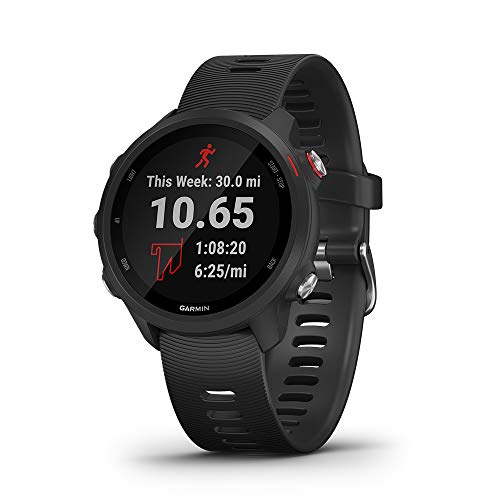
2.Garmin Forerunner 245 Music GPS Running Watch
Training status shows when you’re undertraining or pushing too hard

3.POLAR Street X GPS Running Sports Watch
Built-in GPS and route guidance track distance, pace and performance

4.POLAR Pacer GPS Fitness Tracker Watch
Tracks time, pace, distance and laps on an always-on color display

5.findtime SD2197 Pedometer Watch with Pace
Tracks steps, distance, calories and exercise minutes as you move

6.Casio G-Shock Move GBD-H1000-4 Running Watch
GPS and heart rate data track distance, speed and pace as you train

7.findtime 1086 Digital Tactical Sports Watch
Pacer metronome helps stabilize your running pace as you exercise
1. EZON T031B01 GPS Running Watch with Pace
EZON GPS Running Watch handles pace tracking and workout timing with a built-in GPS receiver. It can start GPS from cold in about a minute, while a hot start reconnects instantly when you resume an activity.
During a run, it records distance, average pace, calories burned and total time. Afterward, one button press brings up those results, and the watch stores your 10 most recent exercise records.
For interval work or longer routes, the stopwatch runs up to 99 hours, 59 minutes and 59 seconds. Countdown and lap modes are available, with data for as many as 50 laps, including duration, pace, distance and average speed.
You can enter your height, weight, age and gender, then choose imperial or metric units for personalized fitness tracking. The GPS receiver also sets the time automatically based on the city you select.
The matte black watch has 5ATM water resistance for activities such as swimming, showering and handwashing. Its alarm sounds for about 20 seconds and stops when you press any button; avoid pressing the controls underwater.
This running watch suits runners who want GPS pace records and lap timing without relying on a phone, along with basic workout summaries and daily timekeeping.
- GPS tracks running pace, distance, and time
- Saves data from up to 50 laps
- Stores the last 10 workout records
- 5ATM rating supports swimming and showers
- Cold GPS start takes about one minute
2. Garmin Forerunner 245 Music GPS Running Watch
For tracking pace and guiding training, the Garmin Forerunner 245 Music combines GPS with running metrics and music playback. It also reviews your training status, helping you see whether your current workload points toward undertraining or overdoing it.
Garmin Coach offers adaptive training plans, and you can also build custom workouts through the Garmin Connect fitness community. These options help you set a training structure around your running goals.
For more detailed form data, the watch can record ground contact time balance, stride length and vertical ratio when paired with a Running Dynamics Pod or an HRM-Run or HRM-Tri monitor. Those accessories are sold separately, so this data requires an extra purchase.
Music streaming services such as Spotify can sync with the watch, letting you store and play songs from your wrist. Battery life reaches up to seven days in smartwatch mode, or up to six hours in GPS mode with music.
During select activities, incident detection can send your real-time location to emergency contacts through a paired compatible smartphone. The black watch has a Corning Gorilla Glass 3 lens, a fiber-reinforced polymer bezel and a silicone strap.
At about 0.08 pounds, it keeps its weight low for runs and everyday wear. Runners who want GPS pace tracking, training guidance and on-watch music may find it a useful fit, especially if they already have compatible running-dynamics accessories.
- GPS tracking supports pace-focused runs
- Up to 7 days in smartwatch mode
- Stores and plays music from the watch
- Training status flags undertraining or overdoing it
- Advanced dynamics need a separate accessory
3. POLAR Street X GPS Running Sports Watch
Built-in GPS tracks distance, pace and performance on the Polar Street X, while route guidance and back-to-start navigation help you follow a course or find your way back. Those tools suit city runs, outdoor training and workouts that mix several activities.
The AMOLED display presents your running information on the watch, and wrist-based heart rate tracking gives you real-time effort data without a chest strap. You can use that information to guide your pace and training intensity during a run.
Its battery lasts up to 10 days, or up to 43 hours while tracking with GPS. That gives runners room for regular training between charges, with enough GPS time for long sessions.
Beyond running, the watch offers more than 170 sport profiles, including strength training, HIIT and cycling. That range makes it useful for tracking gym sessions and other workouts alongside your runs.
The Night Black watch weighs about 48 grams and has 50-meter water resistance, so rain and gym use fit its stated capabilities. Its shock-resistant build also suits daily wear and training where the watch may take ordinary knocks.
The title also lists a built-in flashlight, while the small-to-large band size covers different wrists. This watch suits runners who want pace and route tools, plus heart-rate tracking and profiles for training beyond running.
- Built-in GPS tracks pace and distance on runs
- Route guidance helps you follow running courses
- Up to 43 hours of GPS tracking per charge
- More than 170 profiles cover varied workouts
- 50-meter water resistance suits rain and swimming
- No major cons
4. POLAR Pacer GPS Fitness Tracker Watch
Runners who want to track pace, distance and laps get those essentials on the POLAR Pacer. Its GPS records your route, including each step and turn, so you can follow where a run went as well as how fast you moved.
The always-on MIP color display shows time, pace, distance, laps and stopwatch readings during a workout. Because the screen stays on, you can check run details without first waking the watch.
Battery life reaches up to 35 hours in training mode on one charge. That gives runners room for regular sessions between charges, while power save mode extends the stated runtime to as much as 100 hours.
The watch comes in an S-L size and a black finish, and the title lists it for men or women. At about 0.09 pounds, it adds little weight to a run, and its compact case is suited to wearing during workouts.
Beyond running, the stopwatch and lap tracking help organize timed sessions and compare segments. The controls are described as easy to use, which keeps the core tracking functions approachable for runners who want pace and distance data without a complicated setup.
This model suits runners who want an uncomplicated GPS watch for tracking pace, routes and workout time. Its long power-save runtime also makes it worth considering for buyers who prefer fewer charging stops.
- GPS tracks steps and turns along your route
- Always-on color display shows pace during runs
- Up to 35 hours of battery in training mode
- Power-save mode runs for up to 100 hours
- About 0.09 pounds for a lightweight fit
- No major cons
5. findtime SD2197 Pedometer Watch with Pace
On running routes and camping trips, the findtime pedometer watch puts step and activity tracking, a compass and basic timing tools on your wrist. Its step counter also records distance, calories burned and exercise minutes, giving you several measures of your activity.
For pace tracking, the watch includes a pacer alongside its pedometer. The data does not specify pace units or accuracy, so runners looking for detailed pace readings should note that limit.
The compass provides direction without relying on GPS, which can help with outdoor navigation. A stopwatch and countdown timer also support timed runs and other activities.
Its large digital numbers show the time, while the imported movement keeps time. The alloy bezel and ABS case pair with a breathable nylon strap, and the stainless steel back supports use in rain, swimming, hand washing and cold showers. Don’t press buttons underwater.
An LED backlight helps you read the display in low light. The watch also offers an alarm, calendar, weekday display and 12- or 24-hour time format.
Bluetooth and an app are not part of this watch, so it works as a standalone option rather than syncing activity data to a phone. It suits runners who want simple step and pace functions, plus a compass and timer for outdoor use.
- Tracks steps, distance, calories, and exercise minutes
- Includes a compass for outdoor navigation
- Stopwatch and countdown timer support running workouts
- Lightweight at about 0.14 pounds for comfortable wear
- No major cons
6. Casio G-Shock Move GBD-H1000-4 Running Watch
GPS pace tracking is the core of the Casio G-Shock Move, which also measures heart rate during runs. It can use GPS or accelerometer data to show distance, speed, pace and other workout values.
You can set a target heart rate and view heart-rate zones and graphs on your wrist. The watch also records maximum and minimum heart rates, while training analysis includes VO2MAX, fitness trends, training load and recovery time.
For pace tracking, its training display can show average pace, lap pace, speed and average speed. Auto and manual lap timing, Auto Pause and automatic run timing start help capture workout details, and alerts can mark targets for time, altitude or calories.
GPS can provide position and time information through manual reception, while the watch also receives time automatically once a day. Bluetooth linking is available, and Tough Solar supports charging alongside a dedicated cable that needs a Type-A USB connection.
The red resin-strap watch is shock resistant and water resistant to 200 meters. It also includes an LED backlight and altimeter, barometer, thermometer and compass; the barometer can alert you to significant pressure changes.
The watch stores data for up to 100 runs, with as many as 140 lap times per run. Its detailed running metrics suit people who want pace and training analysis alongside heart-rate tracking.
- GPS tracks pace, speed, and distance on runs
- Heart-rate zones and graphs support training
- Stores up to 100 runs for later review
- 200-meter water resistance suits varied activities
- GPS time sync is only once daily
7. findtime 1086 Digital Tactical Sports Watch
findtime makes this digital watch for runners who want pace tracking alongside everyday activity records. Its pacer function works like a metronome to help you keep a steady running rhythm, while the step counter tracks steps, distance, calories and time.
The watch also includes a compass, stopwatch and countdown timer for workouts and outdoor trips. A calendar and alarm add everyday functions, and the digital display uses an EL backlight so you can check the time at night.
For daytime use, the high-transparency mirror remains visible in strong light, according to the product details. The nylon strap suits a range of wrist sizes, and the watch weighs about 7 ounces, so it is a relatively substantial choice for a running watch.
Its 5ATM water resistance covers hand-washing and rain, but the instructions advise against swimming, diving, hot-water showers and water-related work. You should also avoid pressing buttons underwater.
Shock resistance and sweat resistance make it suited to sports and outdoor use, while its tactical style keeps the look casual. No app or Bluetooth connection is involved, so activity records stay on the watch rather than syncing to a phone.
As our final pick, it suits runners who want a basic pace aid and several activity measures on their wrist, plus a compass for outdoor outings. It is less suited to anyone who needs app-based workout tracking or a watch for swimming.
- Pacer helps runners keep a steady rhythm
- Tracks steps, distance, calories and time
- Compass and countdown timer aid outdoor use
- EL backlight makes nighttime checks easier
- Not suitable for swimming or diving
How to Choose the Best Running Watches to Track Pace
Choosing a running watch affects how clearly you can pace workouts, review progress, and stay on course. Your choice depends on GPS needs, battery life, comfort, training tools, water use, and how much you want to spend.
| If You Need | Look For | Expect |
|---|---|---|
| Reliable outdoor pace | Built-in GPS, recorded routes | Slower lock under trees |
| Even race pacing | Pace alerts, lap splits | More setup before running |
| Long training sessions | Strong GPS battery rating | Larger or heavier watch |
| Basic running records | Time, distance, average pace | Fewer coaching tools |
| Heart-rate guidance | Wrist sensor, zone alerts | Less accuracy during intervals |
| Trail navigation | Route guidance, compass | More menus and setup |
| Simple operation | Large display, physical buttons | Fewer smart features |
GPS Accuracy and Pace
Built-in GPS estimates pace from your movement, so its accuracy shapes the numbers you see during a run. Look for route recording and pace tracking, then consider where you usually run.
Tall buildings, dense trees, tunnels, and sharp turns can disrupt satellite signals, causing pace readings to jump. For steadier results, wait for GPS to connect before starting and use a consistent route when comparing workouts.
Instant pace reflects your speed at that moment, but it often fluctuates as GPS updates. Average pace smooths those changes across the run, while lap pace shows your speed over a chosen distance or time.
If you follow a target pace, look for pace alerts or a screen that shows current and average pace clearly. Alerts help you notice when you drift, though frequent beeps may distract runners who prefer to judge effort by feel.
GPS Connection and Routes
A GPS lock before you move helps the watch begin recording from the right place, but connection time varies with location and signal conditions. A quick reconnection is useful when you run regularly from familiar places.
Route tracking adds a map of where you ran, which helps you review distance and spot missed turns afterward. If you run unfamiliar routes, route guidance and a back-to-start feature offer more help than basic pace tracking.
Some watches combine satellite positioning with motion sensors, which measure movement from your wrist. That approach can support pace tracking when GPS is weak, but it does not replace reliable satellite data for accurate outdoor routes.
Battery Life
Battery life in everyday watch mode differs from battery life while GPS records a workout. Compare the GPS figure, not only the standby estimate, and include music or navigation use if those features stay active during runs.
For short daily runs, a few hours of GPS capacity per charge may be enough. Long runs, races, or multi-day trips call for a larger reserve, especially if you use route guidance or heart-rate tracking.
Power-saving modes stretch battery life by reducing tracking detail or update frequency, so recorded pace may be less responsive. Choose them for long outings where finishing with a record matters more than fine-grained pace changes.
Pace and Lap Tools
Lap timing splits a run into sections, so you can compare each kilometre, mile, or interval. Look for automatic laps and manual lap control if you switch between structured sessions and relaxed runs.
A pace alarm warns you when speed moves above or below a target, which helps during tempo runs and race practice. Make sure its alert range suits your plan; narrow limits may sound often as GPS pace shifts.
A metronome or pacer gives a rhythm cue for your steps, rather than measuring pace directly. It suits runners working on cadence, but it does not show whether you are actually moving at a chosen speed.
Readability and Controls
A readable screen lets you see pace without slowing down or turning your wrist repeatedly. Large digits, strong contrast, and a backlight help in shade, bright sun, and evening runs.
Always-on displays show key numbers without a wrist gesture, which is handy during intervals. They use more power than screens that wake on demand, so weigh quick glances against longer battery life.
Buttons are easier to operate with sweaty hands or gloves, while touchscreens can make menus feel familiar. Check whether you can start, pause, and mark a lap without searching through several screens.
Comfort and Fit
A watch that sits securely makes pace and heart-rate readings more consistent, while a heavy case can feel tiring on longer runs. Compare weight, case size, and strap material against your wrist and usual workout length.
Wrist heart-rate sensors need close skin contact, but a tight strap should not pinch or restrict movement. Try the fit during arm swings, and expect readings to vary more during fast intervals than steady runs.
Light watches suit runners who notice gear on their wrist, while larger designs may offer more controls or outdoor tools. If you wear a watch all day, consider comfort during sleep as well as training.
Heart Rate and Training
Wrist-based heart-rate tracking shows effort alongside pace, which helps you keep easy runs comfortable and assess harder sessions. Look for heart-rate zones or alerts if you train to specific effort ranges.
Optical sensors measure blood flow at the wrist, and sudden pace changes can make their readings lag. For interval training that depends on quick heart-rate changes, a compatible chest strap may provide more responsive data.
Training summaries such as recovery estimates or fitness measures help you review patterns, but they are estimates rather than diagnoses. These tools suit runners following a plan; casual runners may need only time, distance, and pace.
Durability and Water Resistance
Water-resistance ratings describe tested exposure, not every possible use, so read the stated rating before swimming or showering. Rain and sweat suit many running watches, but frequent swimming calls for a rating designed for immersion.
Shock resistance and a reinforced case help if you run on rough trails or wear the watch outdoors all day. Tougher construction often adds bulk, so road runners may prefer a lighter case over extra protection.
Smart Features and Compatibility
Music storage, phone alerts, and safety notifications add convenience, but they are not needed to record pace. Check whether music works without a phone and whether safety features require a paired device or selected activity.
Training plans and data syncing depend on companion apps and compatible phones. Before buying, confirm that the watch supports your phone and exports data to any training service you already use.
Basic watches without apps reduce setup and connected features, which suits runners who want simple records. The trade-off is less detailed review, fewer training plans, and no automatic transfer of workouts.
Price and Value
Entry-level prices usually buy essential timing, distance, and pace tools, with fewer connected features or training summaries. This suits runners who mainly want to monitor outdoor runs and do not need music or detailed coaching.
Mid-priced options often add stronger GPS battery life, heart-rate tracking, lap tools, or route support. Pay more when those features solve a regular need, rather than for functions you will rarely open.
Higher prices may bring richer training analysis, navigation, music, or tougher construction, but they do not guarantee more accurate pace. Set a budget around the features you will use weekly and leave room for accessories if needed.
Warranty and Support
Warranty length and coverage tell you how the seller handles faults, but terms vary by region and retailer. Read what is excluded, how returns work, and whether water damage or battery wear receives coverage.
App support and software updates also affect how useful connected features remain over time. Choose a watch with clear setup instructions and accessible support if you rely on syncing, route tools, or training plans.
Frequently Asked Questions
Do these running watches need batteries or charging?
The product details do not specify the power source for each watch, so check the product listing for battery or charging information before buying.
What materials are these watches made from?
The listed details do not provide materials or build specifications, so consult each product’s listing to confirm its construction.
What comes in the box with each watch?
The included accessories are not specified in the product details; check the seller’s listing for the exact package contents.
Should I choose the POLAR Street X or the POLAR Pacer?
Choose the Street X if route guidance is important to you. The Pacer highlights time, pace, distance and laps on an always-on color display.
Which watch is best for tracking pace with GPS?
The EZON T031B01 tracks distance and average pace with GPS, while the POLAR Street X and Pacer also track pace and distance using GPS.
How can I monitor whether my training is too intense?
The Garmin Forerunner 245 Music provides training-status information to show when you may be undertraining or pushing too hard.
How can I keep a steady pace while running?
The findtime 1086 has a pacer metronome designed to help stabilize your running pace.
So, What Should You Buy?
For most runners, the POLAR Pacer is the best pick, with pace, distance, time and laps on an always-on color display. Choose the EZON T031B01 for straightforward GPS run tracking, or the findtime SD2197 if you want a budget-minded watch that also tracks everyday steps and exercise minutes.
Need training-load guidance? The Garmin Forerunner 245 Music flags undertraining or overdoing it. The POLAR Street X adds route guidance, while the Casio G-Shock Move pairs GPS with heart rate data. For a lighter, simpler pacing aid, consider the findtime 1086. Pick the one that matches your running needs.